
How to Layer Lighting like a Designer
Lighting is one of the most underrated elements in a home. It has the ability to completely transform how a space looks and feels, yet it is often treated as an afterthought. When we design a room, we always come back to the same approach: layered, intentional lighting.
A well-designed space never relies on a single light source. Instead, it is built through a combination of elements that work together to create balance, function, and atmosphere.
The Foundation: Ambient Lighting
The first layer is ambient lighting, which acts as the foundation of the room. This is your primary source of light, the one that fills the space and allows you to see everything clearly. It often comes from ceiling fixtures, pot lights, or even natural light through large windows.
A simple way to think about it is this: if you were cleaning the room, this is the light you would turn on. The goal is to create an even, comfortable glow that feels as close to natural daylight as possible.
The Function: Task Lighting
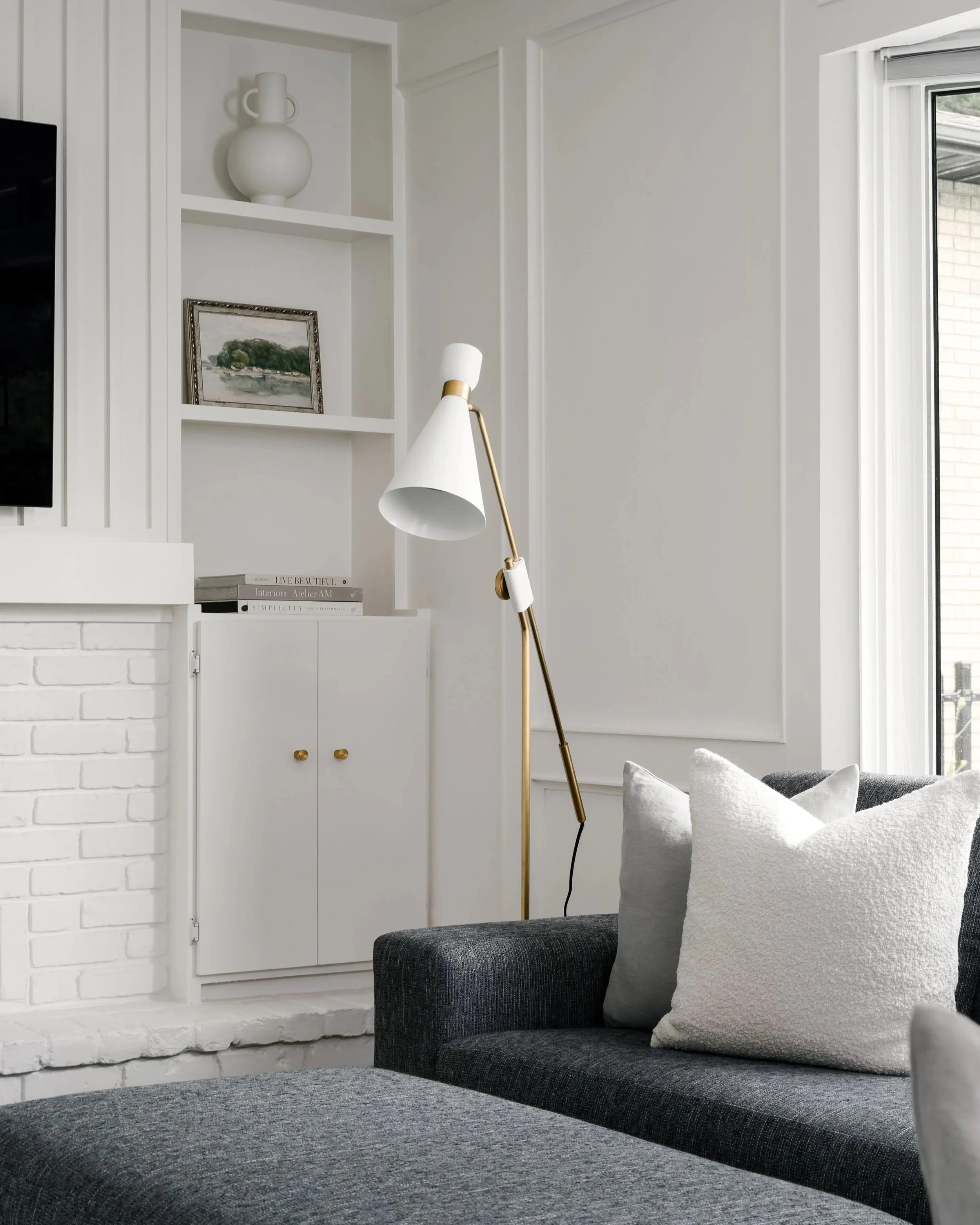
From there, we layer in task lighting, which is where function really comes into play. Task lighting is entirely about how you live in your home. Think of a table lamp beside your bed, under-cabinet lighting in the kitchen, eye-level wall sconces at your bathroom mirror, or a floor lamp next to a reading chair.
Each piece is intentional and tied to a specific use. It may feel subtle, but without it, a space often feels unfinished and does not function as well as it could.
The Atmosphere: Accent Lighting
The final layer is accent lighting, which is where a space begins to feel complete. This is often the most overlooked layer, but it makes a significant impact. Accent lighting draws the eye to key architectural details and adds depth to a room.
It might be a picture light over a favorite painting or sconces that softly highlight a textured wall. More than anything, this layer helps shape the overall mood and creates that warm, inviting atmosphere that people are naturally drawn toward.
The Rule of Layers
When designing a space, a good rule to follow is to include at least two layers of lighting. While three layers is always the ideal, two is the minimum for a room to feel thoughtful and well-considered. Without that balance, even the most beautifully furnished space can fall flat.
The Final Detail: Temperature Matters
Then there is the detail that ties it all together: your lightbulb choice. It is a small decision that makes a noticeable difference in how your home feels. Lightbulbs range in color temperature, typically from 2700K to 5000K. Lower numbers give off a warmer, yellow glow, while higher numbers feel cooler and more blue. For a home that feels natural, warm, and easy to live with, the sweet spot is typically between 2700K and 3000K.
At the end of the day, lighting is not just about brightness. It is about creating a feeling. When it is layered thoughtfully and used with intention, it has the ability to completely elevate your space.
